
IPTV vs Cable TV: An Honest 2026 Comparison
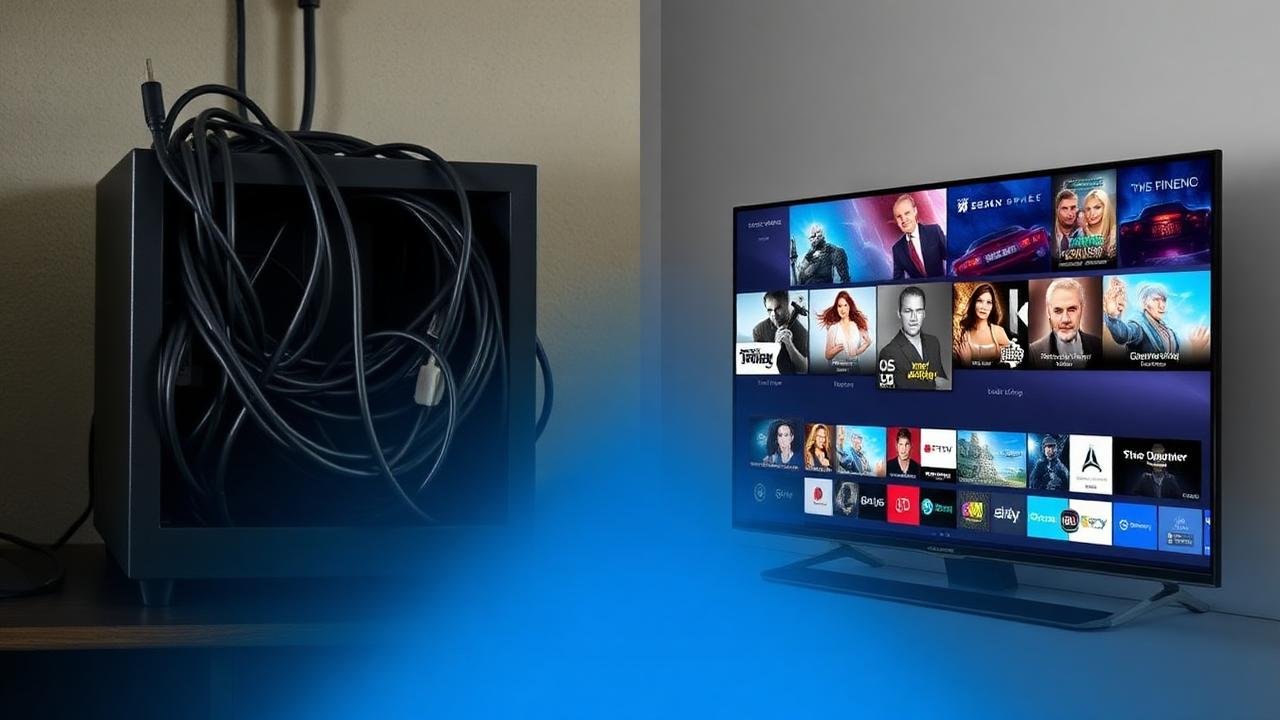
Everyone I know has been asking the same question over the last year: should I finally drop cable and switch to IPTV? It's a fair question and it deserves a real answer, not a marketing pitch. So let's break it down like adults — where IPTV clearly wins, where cable still has a point, and how to decide based on how you actually watch TV.
Price — and yes, this is where the story starts
A standard cable package in Pakistan runs anywhere from Rs. 1,500 to Rs. 4,000 a month depending on the operator and how many "premium" tiers you add. In the US and UK it's much worse — $80 to $150 a month is normal once you count HD fees, box rentals, and taxes.
IPTV, by comparison, sits between Rs. 299 and Rs. 999 a month for the same content — often more. Yearly plans push that number even lower. If you were paying for cable purely because it was the default option, IPTV is almost impossible to argue with on price alone.
Channel choice
Cable gives you a curated list — usually 100 to 300 channels — negotiated by your operator. That has one advantage: everything on that list is guaranteed to work and to be legally licensed in your region.
IPTV opens the door to 15,000–20,000+ channels from all over the world. That includes international sports (La Liga, Serie A, IPL, PSL), regional entertainment (Star Plus, Zee, PTV, ARY, Geo), news from six continents, and kids' channels in half a dozen languages. For a diaspora household or a sports-heavy family, this alone is the reason to switch.
Video quality
Cable in most regions still tops out at 1080p. A few premium operators offer 4K on select channels, usually at extra cost.
IPTV can deliver true 4K on the channels that broadcast in 4K — sports, nature documentaries, premium movie channels. The catch: your internet has to keep up. Below 25 Mbps you'll be watching FHD, and that's fine for most people.
Reliability
Here cable earns its keep. A coax cable rarely cares about the weather. Once installed, it just works.
IPTV depends on two things: your provider's servers and your home internet. A serious IPTV service (with load-balanced anti-freeze servers) will match cable's stability during normal hours. Where cable has an edge is during power cuts — a UPS on your router keeps IPTV alive, but many households don't have one.
Setup and equipment
Cable requires an installer visit, a set-top box, and cabling that runs from a pole into your TV. Once installed, it's plug-and-play but tied to that one wall.
IPTV needs zero installer visits. Any Firestick, Android TV box, Smart TV, phone, or laptop works. That portability — being able to move the whole setup to another room or another country — is something cable just cannot match.
Flexibility and features
Modern IPTV players include features cable operators still charge extra for or don't offer at all:
- 7-day catch-up TV — go back and watch a match you missed on Sunday.
- Full EPG for the next week.
- Pause, rewind, and record live TV.
- Multi-screen viewing on phone, tablet, and TV at the same time.
- Movie and series libraries alongside live channels.
Where cable is still the better choice
Let's be fair. Cable makes sense if:
- You have unreliable internet and live in an area with frequent outages.
- You share the house with older family members who dislike anything with a remote that has more than eight buttons.
- You only watch a small handful of local channels and don't care about international content.
- You're bundled with your internet plan and the marginal cost of cable is basically zero.
If any of those apply, cable isn't wrong — it just isn't exciting.
The real trade-off nobody talks about
Cable is a passive experience. You turn it on and it works, and if your provider is reasonable you never have to think about it again. IPTV rewards a small amount of curiosity — picking a decent player, understanding what an EPG is, changing a DNS if a channel misbehaves.
For most people I know under 45, that trade is easy. For people who just want to sit down and press one button, cable might be worth its higher price.
Pros and cons at a glance
IPTV pros: massive channel selection, low cost, works on any device, portable, 4K where available, catch-up TV.
IPTV cons: needs stable internet, quality of experience depends on the provider, initial setup takes ten minutes.
Cable pros: ultra-simple, weather-proof, no internet needed.
Cable cons: expensive, limited channels, tied to one room, box rental fees, contracts.
How to actually decide
Ask yourself three quick questions:
- Is my internet stable and above 15 Mbps? If yes, IPTV is on the table.
- Do I watch sports, international, or on-demand content more than local news? If yes, IPTV wins by a mile.
- Am I willing to spend ten minutes setting up a Firestick once? If yes, there's no reason left to pay a cable bill.
My honest recommendation
If you tick two out of three of the questions above, try IPTV for one month — the risk is basically the price of a takeaway meal. Keep your cable running for that month as a backup. After 30 days you'll know exactly which one deserves your money for the year ahead.
See Opplex IPTV monthly plans → — start with a short one, test it side by side, and let your own remote pick the winner.
Frequently asked questions
Is IPTV always cheaper than cable?
Almost always, yes — especially on yearly plans. The only exception is when cable is bundled into a package deal where the marginal cost is close to zero.
Which one is more reliable?
Cable is slightly more forgiving during internet outages. On a normal day with decent broadband, a good IPTV service matches cable's reliability and beats it on features.
Can I get the same channels on IPTV that I have on cable?
Yes, plus thousands more from other countries. If a local channel isn't listed, ask your provider — most can add it within a day.
What about live news? Is there a delay?
Live news on IPTV runs 5–15 seconds behind the source. Cable is roughly similar. Neither is instant.
Should I cancel cable the same day I switch?
No — overlap for one month. Use both side by side and let your family vote with the remote. That test is more honest than any review.